
Buying Used Skis? Let’s Talk Binding Indemnification
Skiing in Colorado is pretty incredible. Paying for all the gear? Not always so incredible.
Between skis, boots, bindings, helmets, outerwear, and everything else you need for a day on the mountain, getting outfitted can become expensive in a hurry.
That’s one reason we’re such big fans of buying used ski gear at Mountain Equipment Recyclers (MER). You can find quality equipment for a fraction of what you’d spend buying everything new, often saving hundreds of dollars in the process.
But there’s one important thing every skier should understand before purchasing secondhand skis.
Ski binding indemnification.
It’s a mouthful, we know. And unless you’ve spent some time working in a ski shop, there’s a good chance you’ve never heard the term.
Let’s break down what it means, why it matters, and how we approach buying and consigning used skis at MER.
What Is Ski Binding Indemnification?
First, a quick explanation of what your bindings actually do.
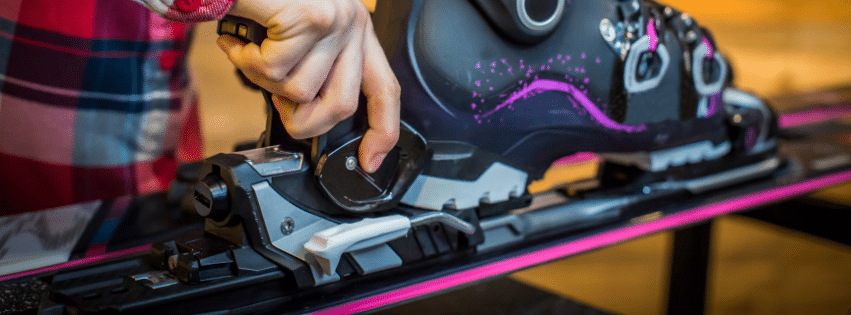
Ski bindings connect your boots to your skis. They hold your boots in place while you’re skiing and are designed to release under certain forces during a fall.
That release function is important because a binding that doesn’t perform as intended can increase the risk of injury.
This is where indemnification comes in.
Ski binding indemnification refers to the manufacturer’s agreement to provide certain liability protections to qualified ski shops and technicians when they service supported binding models according to the manufacturer’s requirements.
Each year, ski binding manufacturers identify which models remain covered under their indemnification programs.
The National Ski & Snowboard Retailers Association (NSSRA) compiles much of this information into an annual Combined Indemnified Bindings List, which helps retailers identify supported bindings and relevant service requirements.
You can learn more about the program through the National Ski & Snowboard Retailers Association.
Does indemnified mean a binding is guaranteed safe?
Not exactly.
This is an important distinction.
An indemnified binding is one that the manufacturer continues to support under its indemnification program. It is not a guarantee that an individual binding is undamaged, correctly adjusted, or safe for a particular skier.
Bindings still need to be inspected, properly matched with compatible boots, and adjusted and tested by a qualified ski technician.
Think of indemnification as one important piece of the equipment safety puzzle, rather than a stamp of approval for every binding of that model.
 Why Do Ski Bindings Lose Their Indemnification?
You might have a perfectly good-looking pair of skis sitting in your garage that hasn’t seen snow in years.
The edges look fine. The bases are in great shape. Even the bindings look practically new.
So why might those bindings no longer be indemnified?
As equipment ages, manufacturers eventually stop supporting certain models through their indemnification programs.
There are several reasons this can happen, including discontinued components, changing equipment standards, limited replacement-part availability, and the challenges of supporting older equipment.
Ski bindings also contain mechanical components that can deteriorate with age, exposure, and use.
Plastics, springs, and other internal parts don’t necessarily last forever.
A binding can look fine from the outside while still having problems that aren’t immediately visible.
And here’s the part that surprises a lot of people:
The age or appearance of the skis themselves doesn’t determine whether their bindings are indemnified.
It’s the specific binding model and its current manufacturer support status that matter.
That’s why checking the current indemnification information is such an important step when shopping for used skis.
MER’s Ski Consignment Standards: What You Need to Know
At Mountain Equipment Recyclers, we want people to have access to quality outdoor equipment without spending a fortune.
But affordability shouldn’t mean ignoring important equipment standards.
That’s why we have a firm policy:
MER does not accept skis on consignment unless their bindings are currently indemnified.
No exceptions.
We check binding eligibility as part of our ski consignment evaluation because we want the equipment on our sales floor to meet our acceptance standards.
We also inspect gear for condition, wear, damage, and overall resale suitability.
Even if your bindings are indemnified, that doesn’t automatically mean your skis will be accepted. They still need to meet our general consignment requirements.
Bringing skis in for consignment?
Before scheduling your appointment, give your equipment a quick once-over.
- Clean off dirt, debris, and old buildup.
- Check for obvious damage, cracks, or missing components.
- Look for significant wear on the ski bases and edges.
- Make sure the bindings are complete and identify their brand and model if possible.
- Bring the equipment in a condition you’d feel comfortable purchasing yourself.
Not sure whether your bindings are indemnified? Our staff can help check their eligibility during the consignment process.
And remember, we accept more than skis! Winter is a great time to consign quality snowboards, ski boots, snowshoes, jackets, snow pants, insulated layers, and other cold-weather equipment.
Ready to clear out some space and give your gear another adventure?
Schedule a Consignment Appointment at MER
Why Buying Used Skis Can Save You Hundreds
Now for the fun part.
You don’t need brand-new equipment to have a great day on the mountain.
A quality pair of used skis can offer excellent performance without the price tag of a brand-new setup.
And when you start adding up everything you need for skiing, the potential savings become pretty significant.
Consider a hypothetical shopping trip:
| Gear | Example New Price | Example Used Price |
|---|---|---|
| Skis with bindings | $650 | $275 |
| Ski boots | $350 | $125 |
| Ski poles | $65 | $20 |
| Ski jacket | $200 | $75 |
| Total | $1,265 | $495 |
That’s a potential savings of $770.
These are illustrative prices, not current MER inventory or guaranteed savings. Actual prices vary by brand, condition, model, and availability.
But they demonstrate why shopping secondhand can make such a difference, especially for beginners, growing families, and anyone trying to keep their winter adventures affordable.
Plus, buying used keeps quality equipment in circulation instead of letting it collect dust in someone’s garage.
That’s a win we can get behind.
How to Choose the Right Used Skis and Boots
One of the biggest misconceptions about buying secondhand gear is that you’re stuck figuring everything out on your own.
Not at MER.
Our staff can help you navigate the equipment on our floor and find skis and boots that make sense for your needs.
If you’re new to skiing, there are a few things worth considering.
Your skiing ability
Beginners generally benefit from equipment that’s forgiving and easier to control.
More experienced skiers may prefer something stiffer, more responsive, or designed for a particular type of terrain.
Ski length and width
Your height, weight, ability, and preferred terrain all influence what ski dimensions may work best.
Shorter skis can be easier to maneuver, while longer skis may offer more stability at speed. Ski width also affects how equipment performs on groomed runs, variable snow, and powder.
There’s no single perfect ski size for everyone.
Boot fit
Your ski boots are arguably one of the most important pieces of your setup.
A boot that’s too large can reduce control. One that’s too small or poorly shaped for your foot can turn a fun day into a miserable one.
We can help you narrow down used boot options, but a professional boot fitter is worth considering when fit is challenging.
Boot and binding compatibility
Not every ski boot works with every ski binding.
Different boot sole standards, including traditional alpine and GripWalk systems, have specific compatibility requirements.
A binding being indemnified does not automatically mean it will work with your particular boots.
Before skiing on a new-to-you setup, have a qualified technician verify compatibility, adjustment, and release function.
If you have questions while shopping, ask us! We’d much rather help you understand your options than have you leave with equipment that doesn’t suit your needs.
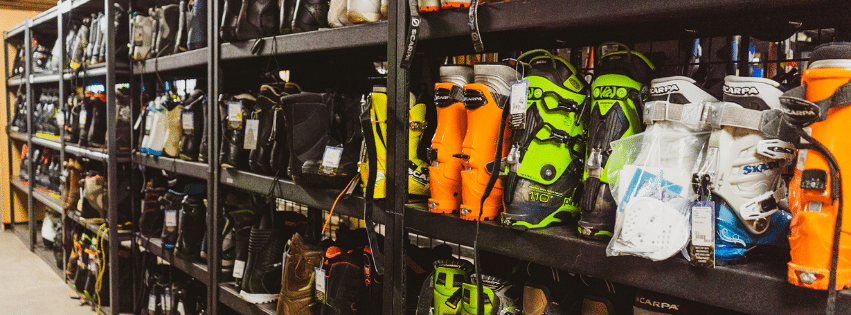
More Than Just Skis: Get Winter-Ready at MER
Skis and boots are only part of the equation.
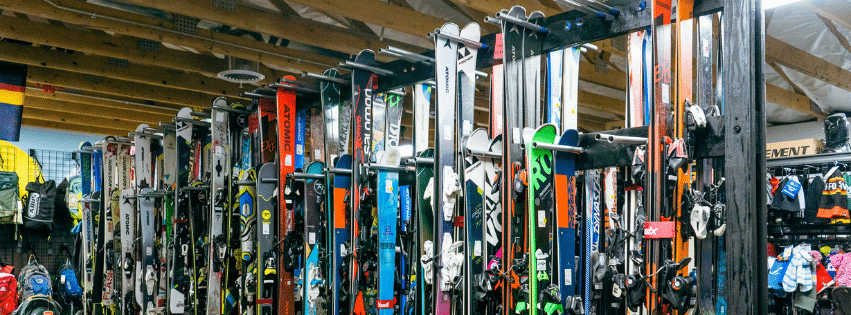
Whether you’re putting together your first ski setup or replacing a few pieces of well-loved gear, MER carries a rotating selection of winter essentials.
Depending on what’s come through the shop, you may find:
- Used skis and ski boots
- Used ski poles
- New ski helmets
- Winter jackets and snow pants
- Gloves and mittens
- Hats and beanies
- Base layers and insulated clothing
- Snowboards and snowboard boots
- Snowshoes and other winter outdoor equipment
We particularly love that shoppers can combine used equipment with new essentials.
For example, buying secondhand skis, boots, and poles can free up more of your budget for a properly fitted new helmet or other gear you’d prefer to purchase new.
And because MER is a consignment shop, our inventory is always changing.
That means the ski setup you saw last week might be gone tomorrow, and something completely different could show up in its place.
Half the fun is seeing what’s new on the floor.
Where to Get Your Skis Waxed, Tuned, or Serviced in Colorado Springs
Here’s something important to know before you head up the mountain:
MER does not offer ski servicing, waxing, binding adjustments, or tunes.
For those services, we recommend the ski and snowboard shop at REI Colorado Springs.
Their shop offers services including ski waxing, edge sharpening, full tunes, repairs, binding mounting, and binding function/release testing.
You can check their services, availability, and pricing here:
REI Colorado Springs Ski & Snowboard Shop
Before bringing in older bindings for service, contact the shop to confirm that your particular model is eligible for service.
Having a qualified technician inspect and adjust your setup is an important step before taking used skis onto the slopes, even when the bindings are indemnified.
Have Kids Who Keep Outgrowing Their Ski Gear?
If you’ve got kids who ski, you already know the struggle.
You finally get them into boots that fit, find the right ski length, and before you know it, they’ve grown another three inches.
Buying brand-new gear every time they size up can get expensive.
That’s why MER offers a Junior Ski Trade-In Program to help families make the transition a little easier.
Here’s how it works:
- Kids’ skis: Trade in qualifying skis up to 145 cm and receive $50 toward another pair.
- Kids’ ski boots: Trade in qualifying boots and receive $15 toward another pair of kids’ boots.
Ski bindings must be indemnified to qualify, and we’ll check them when you bring them in.
Trade-in credit is valid the same day only and must be applied toward the qualifying replacement purchase. No gift cards or store credit are issued.
It’s a simple way to keep growing kids on the mountain without starting from scratch every season.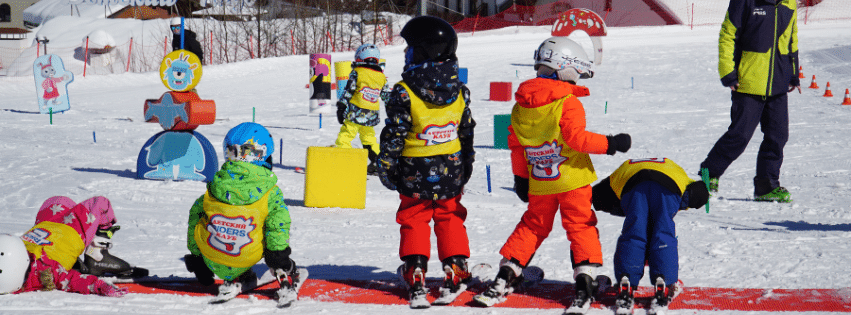
Better Gear Decisions. More Days on the Mountain.
Skiing is already an investment. Lift tickets, travel, lodging, and all those post-ski snacks add up quickly enough.
Your equipment doesn’t always have to be the most expensive part.
Buying used is a practical way to stretch your budget, discover quality gear, and keep perfectly good equipment in use.
The trick is knowing what to look for, understanding important details like ski binding indemnification, and getting professional service when your equipment needs it.
At MER, we’re here to help make outdoor adventures more accessible, whether you’re shopping for your very first ski setup or finally replacing the gear you’ve been using for the past decade.
And there’s another reason to feel good about shopping with us.
100% of MER’s net profits go toward supporting local nonprofits and community organizations.
So when you shop secondhand, you’re not just saving money and giving gear another adventure. You’re helping support the community we all get to explore.
Stop by Mountain Equipment Recyclers at 2222 Bott Avenue in Colorado Springs and see what’s on the winter gear floor.
Great Gear. Greater Cause.
Frequently Asked Questions About Ski Binding Indemnification and Used Ski Gear
What does ski binding indemnification mean?
Ski binding indemnification means a manufacturer provides certain liability protections to qualified retailers and technicians who service supported binding models according to the manufacturer’s requirements. It does not guarantee that an individual binding is safe or properly adjusted.
How do I know if my ski bindings are indemnified?
Binding manufacturers maintain model-specific indemnification information that is updated by season. Qualified ski retailers can consult current manufacturer information or the industry’s Combined Indemnified Bindings List. MER can check binding eligibility when evaluating skis for consignment.
Can I still ski on non-indemnified bindings?
A binding losing indemnification doesn’t automatically mean it has failed mechanically, but the manufacturer no longer provides the same liability support for servicing it. Many ski shops will decline to adjust or test non-indemnified models. Have a qualified ski technician assess your equipment rather than assuming older bindings are suitable for continued use.
Does MER accept skis with non-indemnified bindings?
No. MER does not accept skis on consignment unless their bindings are currently indemnified. All equipment must also meet our general consignment standards.
Can I buy used skis safely?
Buying used skis can be a great option when you understand what you’re purchasing. Look for equipment in good condition, confirm that bindings are supported and compatible with your boots, and have the complete setup professionally inspected, adjusted, and tested before skiing.
Do used skis need to be waxed or tuned?
That depends on their condition and recent service history. Used skis may benefit from fresh wax, edge maintenance, or a full tune before heading to the mountain. A professional ski technician can help determine what they need.
Does MER offer ski waxing or binding adjustments?
No. MER does not offer ski service. We recommend the REI Colorado Springs Ski & Snowboard Shop for waxing, tunes, repairs, and eligible binding services.
Can MER help me find the right used skis and boots?
Yes! Our staff can help you explore available equipment based on your ability, size, skiing preferences, and budget. Final boot-binding compatibility, binding adjustment, and release testing should be handled by a qualified ski technician.
How much money can I save buying used ski gear?
Savings depend on the equipment, brand, condition, and current inventory. Purchasing used skis, boots, poles, and outerwear instead of buying everything new can potentially save hundreds of dollars on a complete setup.
Does MER sell new ski helmets?
Yes. MER stocks new ski helmets alongside a rotating selection of used ski equipment, clothing, and winter accessories. Availability varies, so stop by the shop to see what’s currently on the floor.
Does MER have a ski trade-in program for kids?
Yes. MER’s Junior Ski Trade-In Program offers $50 toward qualifying replacement skis when trading in eligible kids’ skis up to 145 cm, or $15 toward qualifying replacement kids’ ski boots. Ski bindings must be indemnified, and credits must be used the same day.